

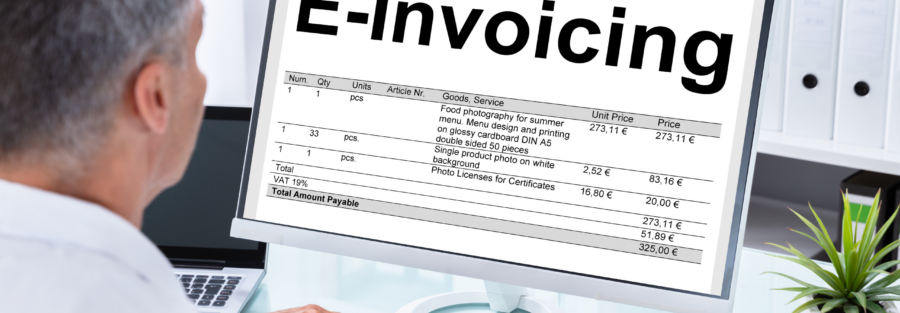
E-invoicing 2026-2027: the complete guide so you miss nothing
E-invoicing: 1 September 2026 will remain a turning point for French businesses. It is the day the obligation to receive electronic invoices came into force for all VAT-registered businesses, and the day large companies and mid-sized companies (ETIs) began issuing their own invoices in this new format. In a year’s time, on 1 September 2027, it will be the turn of SMEs, micro-businesses, the self-employed and regulated professions.
If you run a small business, you may still be wondering what this reform will actually change for you, and above all, from when. This guide covers everything you need to know: timeline, obligations, formats, penalties and action plan.
What exactly is e-invoicing?
The reform distinguishes between two obligations that are often confused.
E-invoicing concerns transactions between VAT-registered businesses established in France (B2B). It requires invoices to be issued, transmitted and received in structured form, via a platform approved by the State. Note: a PDF invoice sent by email, however convenient, is not an electronic invoice within the meaning of the law. It is paperless, but not structured.
E-reporting completes the system for everything outside e-invoicing: sales to consumers (B2C) and transactions with other countries. In this case, the business sends the key data of these transactions directly to the tax authorities.
The 2026-2027 timeline to know by heart
- Since 2020: all businesses invoicing the public sector already have to use Chorus Pro, with no change under this reform.
- 1 September 2026: all VAT-registered businesses must be able to receive electronic invoices. At the same time, large companies and mid-sized companies must issue their invoices in this format and submit their e-reporting data.
- 1 September 2027: SMEs, micro-businesses, the self-employed and regulated professions must in turn issue electronic invoices and submit their e-reporting data.
In other words, if you are a micro-business or self-employed, you must already be able to receive an electronic invoice today, but you still have a year to prepare your own switch to issuing them.
Who is affected by this reform?
All businesses established in France and registered for VAT are affected as soon as they work with other businesses in France. This includes large companies, mid-sized companies, SMEs, micro-businesses, the self-employed and regulated professions. Even micro-entrepreneurs exempt from VAT need to prepare: they will have to be able to receive electronic invoices from 2026, and issue their own from 2027 if they work with business customers. Only purely B2C transactions or transactions with other countries fall outside e-invoicing, but they are still subject to e-reporting. Check where you stand with our e-reporting 2027 readiness test.
How will your invoices be exchanged?
The initial plan provided for a universal, free Public Invoicing Portal (PPF). Its role has since been refocused: the administration now operates a central directory, which identifies each business and routes invoices, while the actual exchange goes through Partner Dematerialisation Platforms (PDPs), private operators registered by the State. Every business must use at least one PDP.
In practice, you do not necessarily have to choose a PDP on your own: many management software packages, such as Dirigeoo, include a direct connection to a PDP, so you can issue and receive compliant invoices with no extra technical steps.
Which invoice formats will be accepted?
Three structured formats are recognised for B2B exchanges: Factur-X (a readable PDF combined with embedded XML data, the best suited to small businesses), UBL and CII (two pure XML formats). A simple PDF or an image of an invoice will no longer be enough from the date you are required to issue electronic invoices. The reform also introduces new mandatory details: the customer’s SIREN number, the delivery address if it differs from the billing address, and the nature of the transaction.
What do you risk if you are not compliant?
Beyond the financial penalties provided for by law, the most concrete risk is operational: invoices rejected or put on hold by customers who are already compliant, longer payment times and a loss of credibility with your partners. A non-compliant supplier may therefore see its cash flow directly affected by blocked invoices.
How to prepare now
- Take stock of your current invoicing (software used, volumes, types of customers).
- Identify your deadline based on the size of your business.
- Choose management software already connected to a PDP rather than handling a technical registration on your own.
- Update your customer and supplier data (SIREN numbers, delivery addresses).
- Train your teams on the new mandatory invoice details.
- Test the system several weeks before your deadline.
Going further
This guide sums up the essentials, but the reform involves many practical details: how the PDP ecosystem works in full, frequently asked questions, and opportunities to seize beyond the regulatory constraint. We have brought all this together in a complete, free, downloadable white paper: [Download the white paper “E-invoicing in France”].
At Dirigeoo, we believe this reform is also an opportunity to simplify your day-to-day management. Our platform centralises your invoicing, cash flow, purchases and projects, with a connection already designed to guide you smoothly towards compliance.
External reference (in French): impots.gouv.fr